
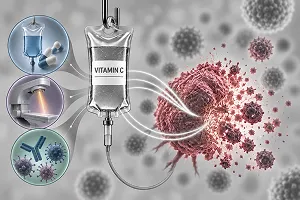
The fact that vitamin C is an essential nutrient does not mean that very high intravenous doses are automatically risk-free. Pharmacological IV vitamin C is administered at doses far above normal nutritional requirements, so appropriate medical assessment is important. Clinical studies have generally reported good tolerability, but serious complications can occur in susceptible individuals. Source →
Kidney Function
The kidneys play a major role in eliminating vitamin C and its metabolites. People with impaired kidney function may therefore require particular caution. High-dose IV vitamin C has been associated with concerns including oxalate accumulation and kidney injury in susceptible individuals.
G6PD Deficiency
Glucose-6-phosphate dehydrogenase, commonly abbreviated G6PD, is an enzyme involved in protecting cells from oxidative damage. Because pharmacological IV vitamin C can increase oxidative stress under certain conditions, people with G6PD deficiency may face an increased risk of hemolysis. For this reason, screening may be considered before high-dose treatment, particularly when very high doses are being contemplated.
Hemochromatosis and Iron Handling
People with disorders involving excessive iron accumulation may also require special consideration. Vitamin C can influence iron absorption and metabolism, making clinical assessment particularly important in patients with iron-overload conditions.
Infusion-Related Effects
IV treatment itself can produce practical issues such as discomfort at the infusion site, fluid-related considerations, and changes in laboratory measurements. High-dose vitamin C can also interfere with certain laboratory assays, particularly some glucose-monitoring methods, potentially producing misleading results. For patients receiving intensive cancer treatment, communication between the infusion team and oncology team is therefore important.
Drug Interactions
The interaction question is more complicated than simply asking whether vitamin C is an antioxidant. Different chemotherapy drugs work through different mechanisms, and the clinical significance of vitamin C depends on dose, timing, route, drug metabolism, and the individual patient. Available studies have not established a universal rule that IV vitamin C either interferes with or enhances all cancer treatments.
Source →
Why Medical Supervision Matters
High-dose IV vitamin C should not be treated like an ordinary nutritional supplement. Before treatment, clinicians may consider kidney function, medical history, medication use, G6PD status, cancer treatment regimen, hydration, and other relevant laboratory findings. The appropriate dose and infusion schedule are also clinical decisions rather than standardized nutritional recommendations.
Overall Safety Evidence
A systematic review of IV ascorbate clinical trials found that treatment was generally well tolerated. The NCI similarly reports that IV vitamin C has generally been well tolerated in clinical trials.
Source →