
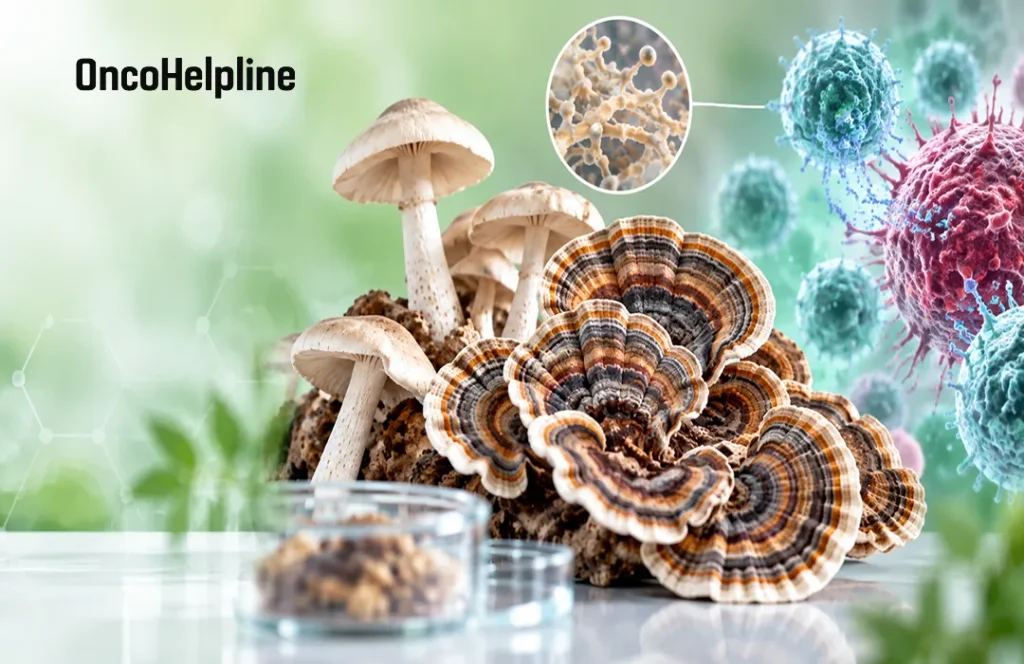
Medicinal Mushrooms & Cancer
Medicinal mushrooms are a group of fungi that contain naturally occurring bioactive compounds and have been used in traditional medicine in different parts of the world for centuries. Today, they are also being studied by scientists for their potential effects on the immune system, inflammation, and other biological processes.
Mushrooms such as Turkey Tail, Reishi, Shiitake, Maitake, and Agaricus blazei contain compounds including polysaccharides, beta-glucans, and triterpenes. Researchers are investigating how these compounds interact with cells and immune pathways and whether they could have a role in supportive or complementary areas of oncology research.
The scientific evidence, however, varies considerably between different mushroom species and preparations. This makes it important to examine each mushroom and each type of study carefully.
→ Learn more about medicinal mushrooms
What Are Medicinal Mushrooms?
Medicinal mushrooms are fungi that contain naturally occurring compounds being studied for their biological effects on human health. Unlike ordinary mushrooms viewed primarily as food, these species and their extracts have a long history of traditional use and are now investigated as sources of polysaccharides, β-glucans, triterpenes, proteins, and other bioactive molecules.
More Than Just a Mushroom
The term medicinal mushroom does not describe one single species or one single treatment. It includes diverse fungi such as Turkey Tail (Trametes versicolor), Reishi (Ganoderma lucidum), Shiitake (Lentinula edodes), and Maitake (Grifola frondosa), each with its own chemical composition and potential biological activities.
Scientists therefore study the individual mushroom, its preparation, and its specific compounds rather than assuming all medicinal mushrooms work in the same way.
Why Are They Interesting to Cancer Researchers?
A major area of interest is the interaction between certain mushroom-derived compounds and the immune system. β-glucans and related polysaccharides have been investigated for their ability to influence immune signaling, while other mushroom compounds are being studied for effects on cellular signaling and cancer biology.
These findings provide a scientific rationale for research but biological activity in a laboratory does not by itself prove a clinical benefit in people with cancer.