
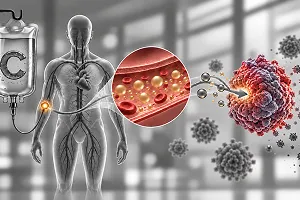
The scientific interest in high-dose intravenous vitamin C comes partly from the fact that vitamin C can behave differently at pharmacological concentrations. At normal physiological levels, vitamin C is widely recognized for its antioxidant functions. At the much higher concentrations achievable through IV administration, researchers have investigated additional biochemical effects that may influence cancer-cell survival.
National Cancer Institute: Vitamin C →
From Antioxidant to Pharmacological Agent
The body’s normal vitamin C concentrations are maintained within a relatively narrow physiological range. Oral supplementation can raise blood concentrations, but intestinal absorption and renal clearance limit how high those levels can become. IV infusion bypasses these limitations and can generate millimolar plasma concentrations.
This difference is important because pharmacological concentrations can create biochemical effects that are not expected from ordinary nutritional supplementation.
PubMed: Pharmacological Ascorbate and Cancer Research →
Hydrogen Peroxide and Oxidative Stress
One of the best-studied proposed mechanisms involves hydrogen peroxide. At pharmacological concentrations, ascorbate can undergo oxidation and participate in reactions that generate hydrogen peroxide outside cells. Experimental research suggests that this hydrogen peroxide can enter cells and create oxidative stress.
Cancer cells may have particular vulnerabilities to oxidative stress because of altered metabolism, antioxidant systems, iron handling, and mitochondrial function. Researchers therefore investigate whether pharmacological ascorbate can create a biochemical environment that is more damaging to tumor cells than normal cells.
However, this mechanism should not be interpreted as proof that IV vitamin C selectively destroys tumors in patients. Much of the mechanistic evidence comes from laboratory and animal studies. Human tumors are considerably more complex than cell cultures.
PubMed: Pharmacological Ascorbate and Oxidative Stress →
Cancer Metabolism
Cancer cells frequently alter their metabolism to support rapid growth and survival. Some experimental studies have examined whether pharmacological ascorbate interacts with these metabolic differences.
One proposed pathway involves the oxidized form of vitamin C, dehydroascorbate, which can enter cells through glucose transport systems such as GLUT1. Once inside cells, dehydroascorbate can be converted back to ascorbate, a process that consumes reducing equivalents and may increase oxidative stress under certain circumstances.
This research has attracted particular interest in cancers with metabolic and genetic characteristics that may increase sensitivity to oxidative stress.
PubMed: Recent Research on Vitamin C and Cancer Metabolism →
Iron-Dependent and Redox Biology
Vitamin C also interacts with metal ions and redox chemistry. These reactions may influence reactive oxygen species production and cellular signaling.
Researchers are studying whether differences in iron metabolism and antioxidant defenses could partly explain why certain tumor models appear more sensitive to pharmacological ascorbate.
Such findings are scientifically important because they may eventually help identify biomarkers measurable biological characteristics that could indicate which patients might respond.
PubMed: Pharmacological Ascorbate, Redox Biology, and Cancer →
Effects on Cancer-Cell Survival
Laboratory research has reported effects of pharmacological ascorbate on cancer-cell proliferation, oxidative damage, mitochondrial processes, and cell death pathways.
These effects have been investigated in several tumor types, including pancreatic, prostate, colorectal, liver, and other cancer models.
However, laboratory activity does not necessarily translate into clinical benefit. Many compounds demonstrate anticancer activity in cell culture but fail to improve outcomes in human trials because of differences in drug concentration, tumor biology, pharmacokinetics, toxicity, or the tumor microenvironment.
National Cancer Institute: Vitamin C and Cancer →
Why Combination Therapy Is Being Investigated
Researchers are also interested in whether pharmacological ascorbate could make cancer cells more susceptible to other treatments. Preclinical studies have examined combinations with chemotherapy and other anticancer agents.
The rationale varies by cancer and drug. In some models, increased oxidative stress may make tumor cells more vulnerable to treatment. In others, metabolic changes may influence drug response.
These findings provide a basis for further investigation, but preclinical combination effects should not be interpreted as evidence that IV vitamin C improves outcomes when combined with cancer treatment in patients.
PubMed: Pharmacological Ascorbate and Combination Cancer Therapy →
How High-Dose IV Vitamin C May Affect Cancer Cells
The scientific interest in high-dose intravenous vitamin C comes partly from the fact that vitamin C can behave differently at pharmacological concentrations. At normal physiological levels, vitamin C is widely recognized for its antioxidant functions. At the much higher concentrations achievable through IV administration, researchers have investigated additional biochemical effects that may influence cancer-cell survival.
Source: National Cancer Institute →
From Antioxidant to Pharmacological Agent
The body’s normal vitamin C concentrations are maintained within a relatively narrow physiological range. Oral supplementation can raise blood concentrations, but intestinal absorption and renal clearance limit how high those levels can become. IV infusion bypasses these limitations and can generate millimolar plasma concentrations.
This difference is important because pharmacological concentrations can create biochemical effects that are not expected from ordinary nutritional supplementation.
Hydrogen Peroxide and Oxidative Stress
One of the best-studied proposed mechanisms involves hydrogen peroxide. At pharmacological concentrations, ascorbate can undergo oxidation and participate in reactions that generate hydrogen peroxide outside cells. Experimental research suggests that this hydrogen peroxide can enter cells and create oxidative stress.
Cancer cells may have particular vulnerabilities to oxidative stress because of altered metabolism, antioxidant systems, iron handling, and mitochondrial function. Researchers therefore investigate whether pharmacological ascorbate can create a biochemical environment that is more damaging to tumor cells than normal cells.
However, this mechanism should not be interpreted as proof that IV vitamin C selectively destroys tumors in patients. Much of the mechanistic evidence comes from laboratory and animal studies, while human tumors are considerably more complex than cell cultures.
Cancer Metabolism
Cancer cells frequently alter their metabolism to support rapid growth and survival. Some experimental studies have examined whether pharmacological ascorbate interacts with these metabolic differences.
One proposed pathway involves the oxidized form of vitamin C, dehydroascorbate, which can enter cells through glucose transport systems such as GLUT1. Once inside cells, dehydroascorbate can be converted back to ascorbate, a process that consumes reducing equivalents and may increase oxidative stress under certain circumstances.
This research has attracted particular interest in cancers with metabolic and genetic characteristics that may increase sensitivity to oxidative stress.
Iron-Dependent and Redox Biology
Vitamin C also interacts with metal ions and redox chemistry. These reactions may influence reactive oxygen species production and cellular signaling.
Researchers are studying whether differences in iron metabolism and antioxidant defenses could partly explain why certain tumor models appear more sensitive to pharmacological ascorbate. Such findings are scientifically important because they may eventually help identify biomarkers measurable biological characteristics that could indicate which patients might respond.
Effects on Cancer-Cell Survival
Laboratory research has reported effects of pharmacological ascorbate on cancer-cell proliferation, oxidative damage, mitochondrial processes, and cell-death pathways. These effects have been investigated in several tumor types, including pancreatic, prostate, colorectal, liver, and other cancer models.
However, laboratory activity does not necessarily translate into clinical benefit. Many compounds demonstrate anticancer activity in cell culture but fail to improve outcomes in human trials because of differences in drug concentration, tumor biology, pharmacokinetics, toxicity, or the tumor microenvironment.
Source: National Cancer Institute →
Why Combination Therapy Is Being Investigated
Researchers are also interested in whether pharmacological ascorbate could make cancer cells more susceptible to other treatments. Preclinical studies have examined combinations with chemotherapy and other anticancer agents.
The rationale varies by cancer and drug. In some models, increased oxidative stress may make tumor cells more vulnerable to treatment. In others, metabolic changes may influence drug response.